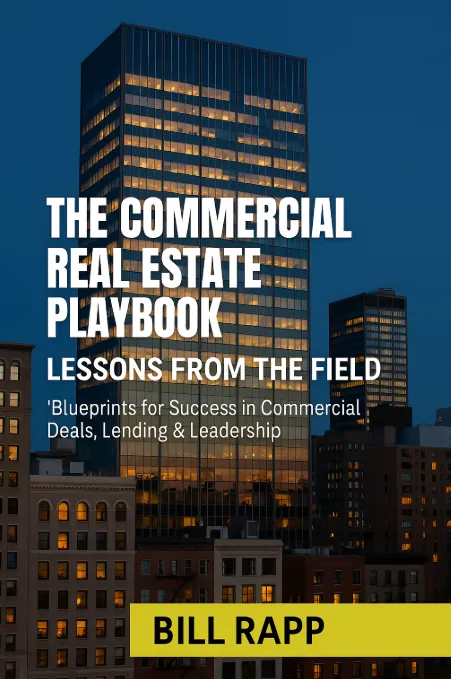
📘 Autographed Collector's Edition – Direct from the Author - CRE Book
What if your next commercial real estate deal could change your life—but no one ever taught you how to make it happen?
The Commercial Real Estate Playbook: Lessons From the Fieldis your behind-the-scenes guide to the strategies, mistakes, and mindset shifts that truly matter in today’s CRE world. Written by veteran broker and financing expert Bill Rapp, this book shares the real-world lessons he learned over a decade in the trenches—now available as an exclusive signed copy straight from the author.
Inside this special edition, you’ll discover:
✅ What separates winning deals from disasters
✅ How to confidently transition from residential to commercial real estate
✅ The psychology of reading people and closing with confidence
✅ Financing tips and creative capital strategies across all asset classes
✅ How to build a team, scale your business, and lead through uncertain times
Whether you're an investor, broker, small business owner, or just breaking into the commercial space, this no-fluff guide delivers the real talk—and real tools—you won’t find in a classroom.
Start building your CRE legacy with insights that actually work—and get your hands on a personally autographed copy today.
🏡 Autographed Collector's Edition – Direct from the Author - Residential Book
Buying your first home doesn’t have to be overwhelming—especially when you have a proven, step-by-step roadmap signed by the expert himself.
The Smart Guide to Buying Your First Home
is your friendly, no-nonsense companion through every stage of the homebuying process. Written by trusted
mortgage broker and real estate advisor Bill J. Rapp Jr.
, this autographed copy
offers not just practical advice, but peace of mind—straight from someone who’s helped hundreds of families navigate their first purchase.
Inside this signed special edition, you’ll
learn:
· 🧠 How credit scores
impact your loan—and how to fix yours fast
· 🏦What lenders really want to see and how to get pre-approved like a pro
· 💸Budgeting truths, hidden fees, and the myth of “$0 down”
· 🛠️The importance of building a dream team—agent, lender, and inspector
· 📝What to expect during inspections, appraisals, and closing, pl🇺🇸 Bonus content for VA borrowers, including how to get your COE and maximize your benefits
Every chapter includes clear action steps, checklists, and insider tips to help you stay organized, informed, and
empowered.
Whether you're buying solo, with a partner, or
for your growing family, this personally signed copy
is more than just a how-to guide—it’s your coach, mentor, and trusted friend for the journey ahead.
Order now to get a signed edition shipped directly from the author—and take the first confident step toward homeownership.
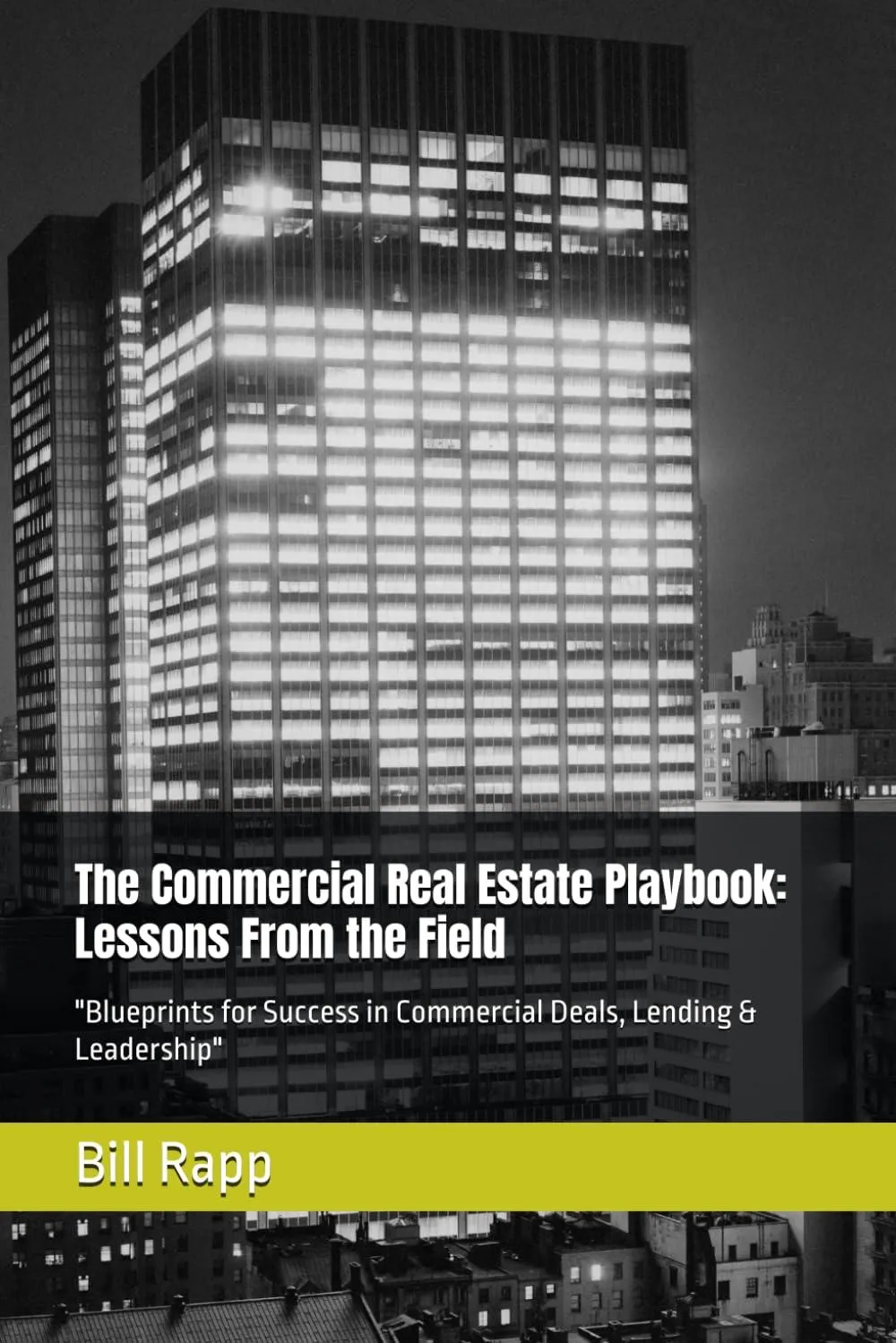
The Commercial Real Estate Playbook: Lessons From the Field:
"Blueprints for Success in Commercial Deals, Lending & Leadership"
What if your next commercial real estate deal could change your life—but no one ever taught you how to make it happen?
In
The Commercial Real Estate Playbook: Lessons From the Field, seasoned broker and finance expert
Bill Rapp
pulls back the curtain on the real-world strategies, pitfalls, and breakthrough moments that shaped his career—and the careers of countless clients and professionals he’s served.
From structuring your first deal and building your personal brand, to overcoming financing roadblocks and surviving market downturns, this no-fluff guide is packed with firsthand stories, actionable insights, and field-tested tools to help you thrive in today’s complex CRE landscape.
Whether you're an aspiring broker, active investor, small business owner, or someone looking to understand the lending side of real estate, this book offers a front-row seat to lessons that aren’t taught in classrooms—but can make or break your success.
Inside you’ll discover:
What separates successful deals from failed onesHow to transition from residential to commercial with confidenceThe art of reading people and closing like a proSmart financing tactics for every asset class—from retail to multifamilyHow to scale your business, lead a team, and future-proof your career
If you're ready to stop guessing and start building a legacy in commercial real estate, this playbook will be your trusted guide.
The Smart Guide to Buying Your First Home!
"From Credit Scores to Closing Day"
Buying your first home doesn’t have to be overwhelming — not when you have a proven roadmap in your hands.The Smart Guide to Buying Your First Home
is a friendly, practical, and down-to-earth companion for anyone ready to turn the dream of homeownership into a reality. Whether you're just starting to think about buying, already browsing listings, or preparing to make an offer, this guide breaks it all down — step-by-step — in language that makes sense.Written by seasoned mortgage broker and real estate advisor
Bill J Rapp Jr, this guide covers everything you need to know, including:
How your credit score affects your mortgage (and how to fix it fast)What lenders arereallylooking for — and how to get pre-approved like a proBudgeting tips, hidden costs, and why “$0 down” doesn’t mean “free”How to build your dream team and search with strategyThe real-deal guide to inspections, appraisals, and closing dayBonus insights forveterans using VA loans— including how to get your COE, debunking common VA myths, and planning for future moves or refinancing
Plus, you’ll find action steps, checklists, and practical tips in every chapter — making it easy to stay organized, empowered, and confident throughout the process.Whether you’re buying solo, with a partner, or as a growing family, this book will help you make smart decisions and avoid costly mistakes.
It’s more than a how-to manual — it’s a trusted guide, mentor, and coach all in one.Homeownership is a journey — not a race. Let’s take that first step together. 🏡

ABOUT AUTHOR
Bill Rapp
Bill Rapp is a seasoned commercial real estate broker and finance expert with over a decade of experience helping clients navigate complex property transactions and capital solutions. Based in Houston, Texas, Bill specializes in investment sales, acquisitions, and commercial financing strategies tailored to meet the needs of investors, developers, and business owners. He brings a
unique blend of market insight, negotiation skills, and financial acumen to every deal, consistently delivering value and growth opportunities for his clients. With a deep knowledge of the Houston and Greater Texas markets, Bill
is committed to building long-term relationships and helping clients make smart, strategic decisions in today’s ever-evolving real estate landscape. When
he’s not closing deals or analyzing the next big opportunity, Bill enjoys time with family, outdoor adventures, and giving back to the local community through mentorship and service.If you’d like, I can help write or edit these based on
the book content we’ve built so far.
- FOLLOW ON SOCIAL -


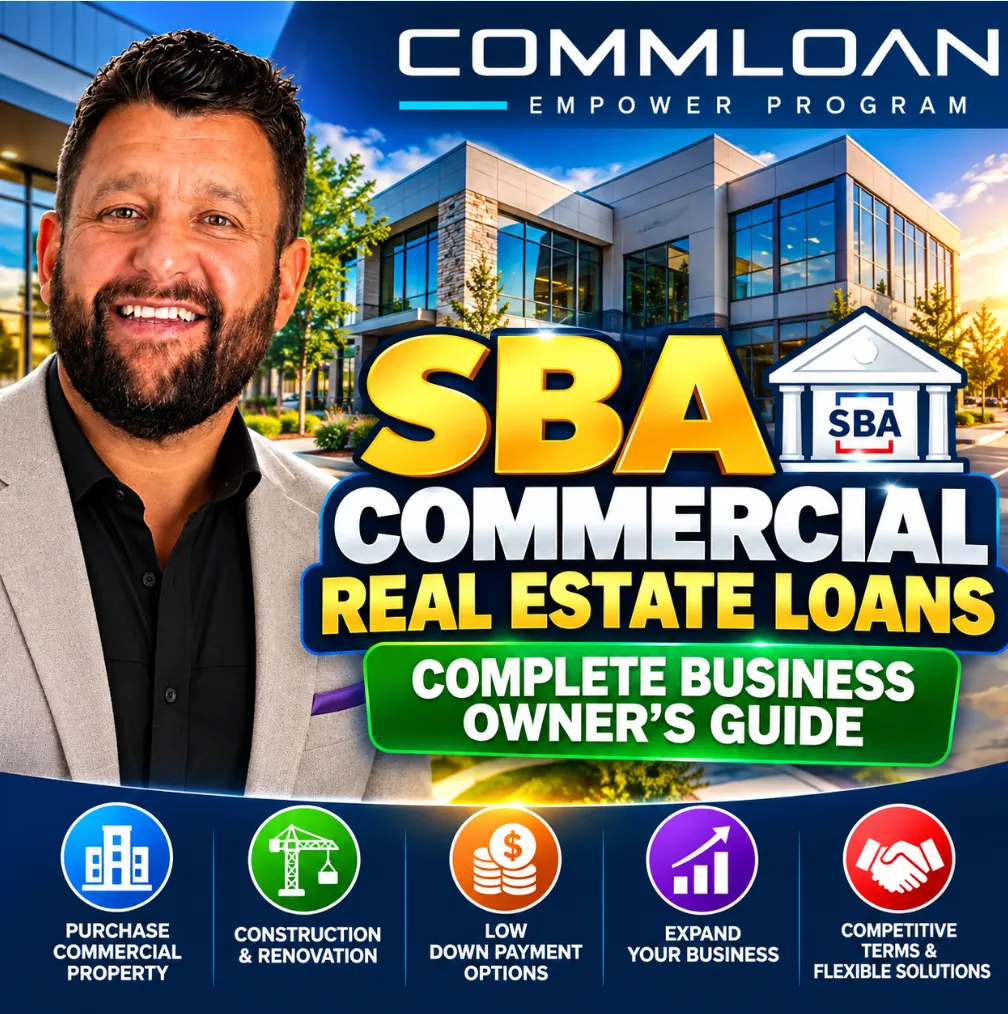
🏢 SBA Commercial Real Estate Loans: The Complete Business Owner's Guide to SBA 7(a) and 504 Financing 💰
🏢 SBA Commercial Real Estate Loans: The Complete Business Owner's Guide to SBA 7(a) and 504 Financing 💰
🚀 Buy Your Business Property With an SBA Loan: Down Payments, Requirements & Financing Options 🏦
_______________________________________________________________________________
SBA Commercial Real Estate Loans: The Complete Business Owner's Guide
Buying commercial real estate can be one of the most significant financial decisions a business owner makes. Whether you're purchasing an office building, medical facility, retail storefront, warehouse, or manufacturing property, owning your business location can provide greater operational control, long-term stability, and an opportunity to build equity.
But financing commercial property often requires substantial capital.
That's where SBA commercial real estate loans can make a meaningful difference.
Through the U.S. Small Business Administration's SBA 7(a) and SBA 504 loan programs, eligible business owners may qualify for commercial property financing with lower down payments, longer repayment terms, and financing structures designed specifically for small businesses.
However, not every SBA loan is the same, and choosing the wrong program can create unnecessary costs or limit your flexibility.
In this guide, we'll examine how SBA commercial real estate financing works, compare SBA 7(a) and SBA 504 loans, explain eligibility requirements, and discuss how business owners can identify the financing structure that best supports their long-term goals.
What Is an SBA Commercial Real Estate Loan?
An SBA commercial real estate loan is financing supported by a federal Small Business Administration program that allows eligible small businesses to purchase, construct, renovate, or refinance qualifying owner-occupied commercial property.
Unlike a conventional commercial mortgage, an SBA loan incorporates a government guarantee or a specialized SBA financing structure that can reduce certain risks for participating lenders.
This can make financing more accessible to qualified businesses that might not meet the requirements of a traditional bank loan.
SBA financing is commonly used for:
·Office buildings and professional facilities
·Medical and dental offices
·Retail stores and restaurants
·Warehouses and industrial properties
·Manufacturing facilities
·Automotive service centers
·Owner-occupied mixed-use commercial properties, where eligible
Important distinction: SBA real estate loans generally finance properties occupied and used by the borrower's operating business. They are not intended to finance passive commercial real estate investments held primarily for rental income.
SBA 7(a) vs. SBA 504: Understanding the Two Primary Programs
The two most common SBA financing programs for commercial property are SBA 7(a) and SBA 504.
Although both can help eligible businesses acquire real estate, they differ substantially in structure, permitted uses, pricing, and flexibility.
Feature | SBA 7(a) | SBA 504 |
Primary purpose | Flexible business financing | Major fixed-asset financing |
Maximum program amount | Generally $5 million | Generally $5 million–$5.5 million SBA debenture, depending on eligibility |
Real estate purchase | Yes | Yes |
Construction or renovation | Yes | Yes |
Working capital | Yes | Generally no |
Equipment | Yes | Long-life equipment |
Typical borrower contribution | Often 10% or more | Commonly 10%; may be higher |
Interest structure | Fixed or variable | Fixed rate on CDC/SBA portion; separate first-lien loan |
Real estate repayment term | Up to 25 years | Commonly 20 or 25 years on the CDC/SBA portion |
Program terms depend on current SBA rules, lender underwriting, project characteristics, and borrower eligibility. SBA 504 project financing can exceed the SBA debenture amount because the first-lien lender provides a separate portion.
SBA 7(a) Loans: Flexible Financing for Business Owners
The SBA 7(a) loan program is the SBA's primary business lending program.
One of its greatest advantages is flexibility.
A qualified business owner may be able to combine several eligible financing needs into a single loan.
What Can SBA 7(a) Loans Finance?
Depending on eligibility and lender approval, proceeds may be used for:
·Purchasing commercial real estate
·Constructing or improving owner-occupied property
·Acquiring an existing business
·Purchasing machinery, furniture, or equipment
·Funding eligible working capital needs
·Refinancing qualifying business debt
For example, a dentist purchasing a building for a new practice might need financing for the property, interior improvements, equipment, and certain startup expenses.
An SBA 7(a) loan may provide a more integrated financing solution than separate commercial real estate and equipment loans.
How Much Can You Borrow?
The standard SBA 7(a) program generally permits loans up to $5 million.
The amount a business can actually qualify for depends on its cash flow, debt obligations, creditworthiness, available collateral, management experience, and the lender's underwriting requirements.
The maximum program amount should never be confused with the amount a particular borrower will be approved to receive.
SBA 504 Loans: Financing Commercial Property and Major Fixed Assets
The SBA 504 program is designed primarily for long-term investment in eligible fixed assets.
It is particularly attractive for established businesses purchasing or constructing facilities they plan to occupy.
How SBA 504 Financing Works
A typical SBA 504 transaction involves three financing components:
Illustrative $2,000,000 eligible project
50%
40%
10%
Bank
$1,000,000
CDC/SBA
$800,000
Borrower equity
$200,000
The bank or participating lender typically finances approximately 50% of the eligible project cost, while a Certified Development Company (CDC) facilitates a separate SBA-backed loan for approximately 40%. The borrower contributes the remaining 10%.
Actual structures can vary. Startups and special-purpose properties may require larger equity contributions.
Why Business Owners Consider SBA 504
An SBA 504 loan may be attractive when a business owner wants predictable long-term financing for a commercial property or major equipment acquisition.
Benefits may include a relatively low initial equity requirement, a long-term fixed rate on the CDC/SBA portion, and financing tailored to owner-occupied business facilities.
However, the first-lien bank loan has its own interest rate, maturity, amortization, and other terms. The total financing package must be evaluated together.
How Much Down Payment Do You Need for an SBA Commercial Real Estate Loan?
One of the most frequently asked questions is:
Can I purchase commercial property with only 10% down?
In some cases, yes.
Qualified borrowers may obtain SBA financing with a 10% equity contribution, but this is not a universal guarantee.
The required investment depends on the loan program, lender, borrower, and property.
For SBA 504 financing, a standard project often begins with a 10% borrower contribution. Certain startup or special-purpose projects can require 15% or 20%.
SBA 7(a) equity requirements depend on the transaction type, applicable SBA rules, and lender underwriting.
Down Payment Example
Consider a business purchasing a $1.5 million commercial property.
10% equity
$150,000
Potential borrower contribution
25% equity
$375,000
Illustrative conventional loan contribution
The difference is $225,000 in upfront equity.
That additional liquidity could be valuable for equipment purchases, hiring, expansion, or maintaining operating reserves.
However, actual cash to close also includes applicable fees, closing costs, and other project expenses. A lower down payment can mean a larger loan balance and greater debt service.
SBA Owner-Occupancy Requirements
One of the most important SBA commercial real estate requirements involves property occupancy.
SBA programs generally require the operating business to occupy:
·At least 51% of an existing building.
·At least 60% of newly constructed property initially, with additional requirements governing future occupancy and permissible leasing.
This means SBA financing is typically appropriate for owner-users rather than passive real estate investors.
Example: Purchasing a Multi-Tenant Office Building
Suppose a business owner wants to purchase a 10,000-square-foot office building.
If the business occupies 6,000 square feet and leases the remaining 4,000 square feet to other tenants, the property may satisfy the basic occupancy threshold for an existing building.
Other eligibility conditions still apply.
By contrast, a borrower purchasing the building solely to lease all 10,000 square feet to unrelated tenants generally would not qualify for SBA owner-occupied real estate financing.
For a passive investment property, conventional commercial loans, DSCR-based financing, or other investment-property programs may be more appropriate.
SBA Commercial Real Estate Loan Eligibility Requirements
SBA loan eligibility involves more than having a good credit score.
Lenders evaluate the operating business, its ownership structure, financial capacity, property use, and compliance with current SBA requirements.
1. Business Eligibility
The business generally must be an eligible for-profit small business operating in the United States and meet applicable SBA size standards.
Ownership, citizenship or residency rules, industry restrictions, and other SBA eligibility criteria must also be reviewed under the rules in effect when the application is submitted.
2. Business Cash Flow
Lenders need evidence that the business can reasonably repay the proposed debt.
They may evaluate historical earnings, normalized cash flow, existing obligations, and financial projections.
3. Credit History
Personal and business credit are important underwriting factors.
There is no single credit score that guarantees SBA approval across all lenders and programs.
4. Management Experience
The lender may consider the borrower's experience managing the business and operating within its industry.
5. Borrower Equity and Liquidity
Borrowers should be prepared to document their equity contribution, available liquidity, and potential post-closing reserves.
6. Property Eligibility
The property must satisfy the applicable SBA occupancy, use, environmental, appraisal, and collateral requirements.
Understanding Debt Service Coverage Ratio
Commercial lenders want to know whether a business generates enough cash flow to repay its obligations.
One common underwriting metric is the debt service coverage ratio (DSCR).
\[ \text{DSCR}=\frac{\text{Cash Flow Available for Debt Service}}{\text{Annual Debt Service}} \]
For example, assume a business generates $300,000 in annual cash flow available for debt service and has $240,000 in annual debt payments.
\[ \text{DSCR}=\frac{\$300,000}{\$240,000}=1.25x \]
A 1.25x DSCR indicates $1.25 of qualifying cash flow for every $1 of annual debt service.
Many lenders use coverage benchmarks around 1.15x to 1.25x or higher, depending on the program and risk profile. There is no universal SBA approval threshold that applies to every transaction.
For owner-occupied properties, the calculation may rely on operating-business cash flow rather than the property's rental NOI alone.
What Documents Do You Need for an SBA Commercial Real Estate Loan?
A well-organized financing package can help a lender evaluate the transaction more efficiently.
Commonly requested documents include:
·Business federal tax returns, often for the previous two or three years
·Personal tax returns from applicable owners or guarantors
·Year-to-date profit-and-loss statement and balance sheet
·Business debt schedule
·Personal financial statements
·Business bank statements
·Purchase contract or letter of intent
·Business ownership and organizational documents
·Property information and available environmental reports
·Construction budgets or improvement estimates, if applicable
·Business plan and financial projections, where required
Additional documentation may be necessary for startups, acquisitions, complex ownership structures, or specialized properties.
SBA Loans for Medical and Dental Offices
SBA commercial real estate loans can be especially useful for medical professionals who want to own their practice locations.
A physician, dentist, veterinarian, or other eligible practice owner may be able to finance an office purchase, buildout, or expansion.
For example, a dentist currently leasing a 3,000-square-foot office might evaluate purchasing a medical office condominium instead.
Ownership could offer greater control over the premises, the ability to build equity, and protection against certain future leasing uncertainties.
However, practice owners should compare the total ownership cost against the cost of leasing, including maintenance, taxes, insurance, improvements, and opportunity cost of equity.
SBA Loans for Warehouses, Industrial Buildings, and Manufacturing Facilities
SBA financing may also help eligible industrial businesses purchase or develop their facilities.
Potential borrowers include manufacturers, distributors, contractors, and service companies that need warehouses, production space, or specialized operating facilities.
For manufacturing businesses, the SBA 504 program can be particularly relevant because of its emphasis on fixed-asset investment and economic development.
Certain qualifying manufacturing and energy-related projects may be eligible for higher SBA 504 debenture limits or specialized program treatment.
Business owners should verify current program-specific eligibility and fee schedules before relying on any incentive.
Can You Refinance Commercial Real Estate With an SBA Loan?
Yes, eligible commercial real estate debt can sometimes be refinanced through SBA programs.
SBA 7(a) refinancing may be appropriate when the transaction meets applicable eligibility and program requirements.
SBA 504 refinancing can also be available for qualifying fixed-asset debt, subject to program conditions.
Potential objectives include improving the debt structure, replacing maturing financing, or funding eligible project expenses.
However, refinancing eligibility, permitted cash-out, and allowable uses of proceeds are highly program-specific.
Borrowers should not assume that SBA refinancing permits unrestricted equity extraction.
How Long Does an SBA Commercial Real Estate Loan Take to Close?
Closing timelines depend on the program, lender, property, and complexity of the transaction.
As general planning estimates, straightforward SBA 7(a) transactions may take approximately 45–90 days, while SBA 504 transactions can require 60–120 days or longer.
These are illustrative planning ranges, not guaranteed timelines.
Appraisals, environmental reviews, title issues, construction requirements, documentation gaps, and lender approvals can extend the process.
Starting early is especially important when a purchase contract contains financing deadlines or a seller requires a firm closing date.
SBA Loans vs. Conventional Commercial Real Estate Loans
SBA financing is not automatically the best choice for every business owner.
Consideration | SBA Financing | Conventional CRE Financing |
Down payment | Potentially lower | Often higher |
Owner occupancy | Generally required | Owner-user or investment properties |
Working capital | Available through eligible 7(a) loans | Depends on lender |
Documentation | SBA-specific requirements | Lender-specific |
Repayment structure | Program-dependent | Lender-dependent |
Passive investment property | Generally ineligible | Often eligible |
Fees and prepayment | Program-specific | Loan-specific |
A conventional loan may be preferable when a borrower has substantial liquidity, needs more flexible ownership or occupancy terms, or wants to avoid certain SBA requirements.
An SBA loan may be preferable when the business qualifies, the property will be owner-occupied, and preserving operating capital is a priority.
The decision should be based on the total financing structure rather than the advertised interest rate alone.
Common SBA Commercial Real Estate Financing Mistakes
Even experienced business owners can make costly mistakes when pursuing SBA financing.
Mistake 1: Assuming every commercial property qualifies. SBA financing generally requires qualifying owner occupancy and an eligible operating business.
Mistake 2: Comparing interest rates without evaluating total costs. Fees, amortization, maturity, prepayment provisions, and required equity can materially affect financing economics.
Mistake 3: Underestimating the cash required to close. A 10% equity contribution does not necessarily mean the borrower needs only 10% of the purchase price in available cash.
Mistake 4: Waiting until after signing a contract to explore financing. Early lender engagement can identify issues before contractual deadlines become a problem.
Mistake 5: Applying to lenders without understanding their credit criteria. Different participating lenders can have different underwriting appetites, even within the same SBA program.
How a Commercial Mortgage Advisor Can Help
Finding an SBA lender is only one part of securing appropriate commercial real estate financing.
The more important objective is identifying a loan structure that aligns with the business's cash flow, liquidity, property requirements, and long-term strategy.
Through the CommLoan Empower Program, I help business owners and commercial real estate borrowers evaluate financing alternatives and navigate the lending process.
CommLoan's CUPID™ platform provides access to a broad commercial lender marketplace, helping identify potential lending options based on transaction characteristics.
A structured financing review can help answer critical questions:
·Is SBA 7(a), SBA 504, or conventional financing the better fit?
·How much equity will the borrower need?
·Can the business support the projected debt service?
·What documentation will lenders require?
·How do repayment terms and prepayment provisions compare?
Access to multiple potential lenders does not guarantee approval, but a well-matched financing strategy can reduce unnecessary friction.
Frequently Asked Questions About SBA Commercial Real Estate Loans
Can I buy commercial real estate with 10% down using an SBA loan?
Potentially. Certain eligible SBA transactions permit a 10% borrower contribution, although higher contributions may apply based on program rules and project characteristics.
Can I use an SBA loan to buy an apartment building?
Generally not when the property is a passive rental investment. SBA financing is designed primarily for eligible operating businesses, subject to program requirements.
Can a new business qualify for an SBA commercial property loan?
Potentially. Startups may qualify, but lenders often require stronger projections, relevant management experience, and additional equity or other risk mitigants.
Are SBA commercial real estate loan rates fixed?
SBA 7(a) loans may have fixed or variable rates. SBA 504 financing typically has a fixed-rate CDC/SBA portion, while the separate first-lien loan has its own rate terms.
Can I use an SBA loan to build a warehouse?
Yes, qualifying owner-occupied warehouse construction can be eligible, subject to the program's requirements and lender approval.
Do SBA loans require a personal guarantee?
SBA programs generally require personal guarantees from individuals owning 20% or more of the applicant business, with additional guarantees potentially required depending on the transaction.
What is the difference between an SBA 7(a) loan and an SBA 504 loan?
SBA 7(a) is generally more flexible regarding permitted business uses. SBA 504 focuses primarily on qualifying long-term fixed assets, such as owner-occupied commercial property and major equipment.
Final Thoughts: Choosing the Right SBA Commercial Real Estate Loan
For qualified business owners, SBA commercial real estate financing can create opportunities to purchase or expand business facilities while preserving capital for other operating needs.
But the right financing decision requires more than finding the lowest advertised down payment or interest rate.
Borrowers should compare eligibility, cash-flow requirements, total borrowing costs, repayment terms, and future business objectives.
Whether you're purchasing your first office building, expanding a manufacturing facility, or refinancing an owner-occupied commercial property, understanding your financing options before committing to a transaction can make a substantial difference.
Ready to Explore SBA Commercial Real Estate Financing?
I'm Bill Rapp, CCIM, with the CommLoan Empower Program.
I help business owners and commercial real estate borrowers evaluate lending options, understand underwriting requirements, and identify financing structures that support their goals.
Explore your commercial financing options:
Bill Rapp – CommLoan Empower Program
Top of Form
Bottom of Form
Bill Rapp, CCIM
Director | CommLoan
📞 281-222-0433
📧 [email protected]
🌐 https://billrapp.commloan.com/
🌐 https://HoustonCommercialMortgage.com/
Commercial Real Estate Financing Nationwide
https://billrapp.commloan.com/
https://author.billrapponline.com/
https://www.amazon.com/dp/B0F32Z5BH2
https://veed.cello.so/FOmzTty6oi9
https://buymeacoffee.com/vikingente3
https://creplaybookseries.billrapponline.com
https://creplaybook.billrapponline.com/
©Bill Rapp, CCIM - Director - CommLoan

Subscribe to Our Newsletter
New Released


Historical Romance
Whispers of the Heart
A young woman stumbles upon a hidden love letter from the past, leading her on a journey to uncover a long-forgotten romance that changed her family forever.
Over A Million Copies Sold!
Stats
Your Perfect Read, Our Promise
Discover the difference our books make through key statistics. From captivating plots to satisfied readers, our numbers showcase the quality, creativity, and trust that define our literary works.
1M+
Satisfied Readers

100+
Books Published
50+
Genres Explored
- LATEST BOOKS -
All Latest Books

Pumpkin Patch Murder
A farm owner investigates a murder at the pumpkin patch just before Halloween, racing to solve the crime before the season is ruined.

Tea and Crime
A café owner investigates a murder after one of her loyal customers is found dead in her shop.

Antique Secrets
An antique store owner uncovers a hidden diary and is drawn into a decades-old mystery.
OUR WORK
What People Are Saying!

"I was hooked from the first page! This author’s storytelling is captivating, and the plot twists kept me on the edge of my seat. Can't wait for the next book!"

Sarah Thompson
"An incredible read! The characters felt so real, and the pacing was perfect. I couldn't put it down. Highly recommend to any mystery lover!"
Lia Johnson
"This author never disappoints! The writing is gripping, the plot unpredictable, and the suspense builds perfectly. Another fantastic book!"

Ethan Clark
- OUR BLOG POST -
Latest News & Article
Januuary 12, 2024
Mastering the Art of Character Development: Tips for Writing Compelling Protagonists

April 11, 2023
Cover Design 101: Tips for Creating an Eye-Catching...
June 25, 2023
Plotting 101: How to Create a Gripping Story Arc from Start to Finish
Dec 16, 2023
The Power of Dialogue: How to Write Conversations that Drive Your Story Forward
Frequently Asked Questions
What types of books do you write?
We specialize in a wide range of genres including historical fiction, romance, mystery, fantasy, and more. Our goal is to create stories that captivate and engage readers from all walks of life.
Where can I purchase your books?
Our books are available on major platforms like Amazon, Barnes & Noble, and local bookstores. You can also find them in e-book and audiobook formats for easy access.
Do you offer signed copies of your books?
Subscribe to our newsletter for the latest updates, book releases, and exclusive offers. Follow us on social media to stay connected and receive real-time news.
How can I stay updated on your new releases?
Subscribe to our newsletter for the latest updates, book releases, and exclusive offers. Follow us on social media to stay connected and receive real-time news.
Do you accept book reviews from readers?
Absolutely! We encourage our readers to leave reviews on platforms like Goodreads, Amazon, or personal blogs. Your feedback helps us grow and reach new audiences.
Can I request a book to be personalized?
Yes, we offer personalized book services. Please contact us directly for more information on how we can make your book special.
Drain Repair And Maintenance
You can contact us through our website’s contact page, or by emailing us directly. We love hearing from readers and potential collaborators!
Do you have a fan club or book club?
We have an active community of fans! Join our book club or fan group online to discuss books, share recommendations, and enjoy exclusive content from our latest releases.

COMPANY
LEGAL
FOLLOW US

©Copyright 2026.. All Rights Reserved.